
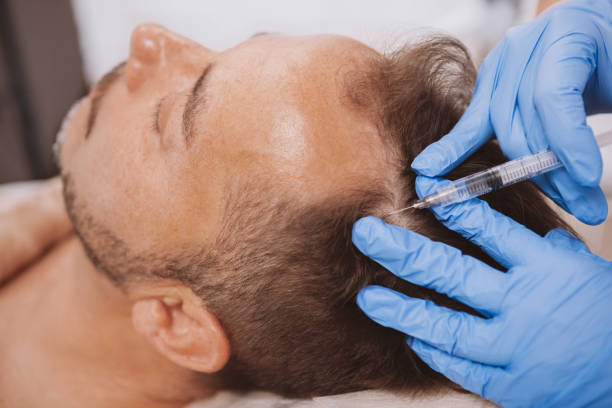
The Role of Scalp Health
The scalp is the foundation of
healthy hair, and maintaining a healthy scalp is crucial for promoting hair
growth and preventing hair loss. A healthy scalp is characterized by:
Adequate blood circulation: Good
blood flow to the scalp helps to deliver essential nutrients to the hair
follicles, promoting hair growth.
Normal pH levels: The scalp's pH
level should be slightly acidic (around 5.5), which helps to maintain a healthy
scalp environment and prevent dryness, itching, and flaking.
Moisture balance: A balanced scalp
with the right amount of moisture helps to prevent dryness, itching, and
flaking.
Proper sebum production: Sebum is
an oil that helps to keep the scalp and hair hydrated and protected. Too much
sebum can lead to an oily scalp, while too little can lead to a dry scalp.
A balanced microbiome: A healthy
scalp has a balanced microbiome, which is a collection of microorganisms that
live on the skin and help to maintain its health.
A healthy scalp is essential for
healthy hair, and neglecting scalp health can lead to hair problems such as
hair loss, dryness, and itching. Some common scalp conditions that can impact
hair health include:
Dandruff: Dandruff is a common
scalp condition characterized by flaking, itching, and redness.
Scalp psoriasis: Scalp psoriasis is
an autoimmune condition that causes red, scaly patches on the scalp.
Scalp eczema: Scalp eczema is a
skin condition that causes red, itchy, and flaky skin on the scalp.
Scalp fungal infections: Fungal
infections on the scalp can lead to hair loss and itching.
Maintaining a healthy scalp
involves:
Proper hygiene: Washing the hair
and scalp regularly with a gentle shampoo and using a conditioner to keep the
hair hydrated.
Avoiding harsh chemicals: Using
hair care products that are free of harsh chemicals, such as sulfates and
parabens, can help to prevent damage to the scalp and hair.
Eating a balanced diet: A balanced
diet rich in vitamins and minerals, such as vitamin C, iron, and biotin, is
essential for maintaining a healthy scalp and hair.
Reducing stress: Stress can impact
the scalp and hair health, so it's important to practice stress-management
techniques, such as meditation, yoga, and exercise.
Seeking treatment: If you have a
scalp condition, it's important to seek treatment from a dermatologist or trichology’s.
In conclusion, the scalp is a critical component of hair health, and maintaining a healthy scalp is essential for promoting hair growth and preventing hair loss. Proper hygiene, a balanced diet, stress management, and seeking treatment for scalp conditions can all contribute to a healthy scalp and hair.
Also read: The Science of Split Ends






Leave a Reply