
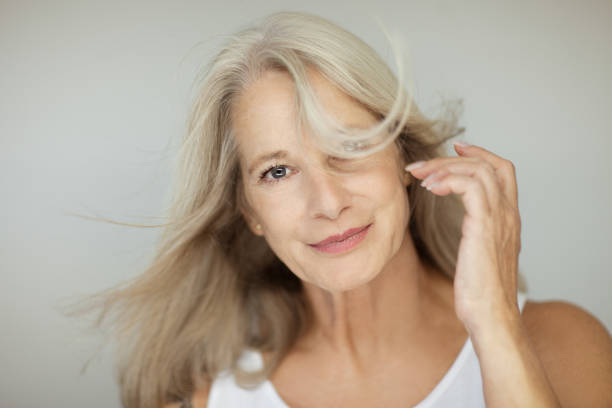
The Impact of Aging on Hair Health
Aging can have a significant
impact on hair health. As we grow older, our hair naturally loses volume,
thickness, and shine, becoming dry, brittle, and more prone to breakage. This
can be due to a combination of factors, including hormonal changes, reduced
blood flow to the scalp, and a decline in the production of natural oils.
One of the most noticeable effects
of aging on hair is a decrease in hair growth. This can be due to a reduction
in the number of hair follicles that produce new hairs, and a decrease in the
length of the anagen (growing) phase of the hair cycle. As a result, hair may
become thin and sparse, and may take longer to grow back if it is damaged or
shed.
Another common issue associated
with aging is a change in hair color. This can occur as a result of a decrease
in the production of melanin, which gives hair its color. As a result, hair may
become lighter, grayer, or even white. This can be more pronounced in those
with naturally lighter hair, and can be accelerated by exposure to UV light or
other environmental factors.
Hair also becomes drier and more
brittle with age, making it more prone to breakage and split ends. This is due
to a decrease in the production of natural oils, which help to moisturize and
protect the hair shaft. As a result, hair may become brittle, frizzy, and more
difficult to manage.
In addition to these changes,
aging can also affect the scalp itself, leading to issues such as dandruff,
itching, and flakiness. This can be due to a decline in the production of
sebum, which helps to moisturize the scalp, and to an increased sensitivity to
certain hair care products or environmental factors.
Despite these changes, it is
possible to maintain healthy hair as we age. This can be achieved through a
combination of proper hair care, a healthy diet, and the use of hair care
products specifically designed for aging hair. For example, incorporating more
nourishing ingredients into your hair care routine, such as biotin, vitamins B
and E, and antioxidants, can help to improve the health of your hair and
prevent further damage.
In addition, avoiding heat styling
tools, excessive chemical treatments, and harsh hair care products can also
help to maintain healthy hair as we age. Instead, opt for gentler products and
avoid over-styling, which can cause further damage to already fragile hair.
Another way to maintain healthy
hair as we age is to eat a balanced diet that includes plenty of vitamins and
minerals that are essential for hair health. These include iron, zinc, and B
vitamins, which can help to improve the strength and elasticity of hair, as
well as to promote hair growth.
Finally, it is important to seek
professional treatment for hair-related issues as we age. This can include
visits to a dermatologist or trichologist, who can diagnose and treat any
underlying conditions that may be contributing to hair loss or other
hair-related issues.
In conclusion, aging can have a significant impact on hair health, but with proper care and attention, it is possible to maintain healthy hair into our later years. Whether through proper hair care, a healthy diet, or professional treatment, taking steps to care for your hair can help to keep it looking its best for years to come.
Also read: Revitalizing Conditioner for Silky Strands






Leave a Reply