
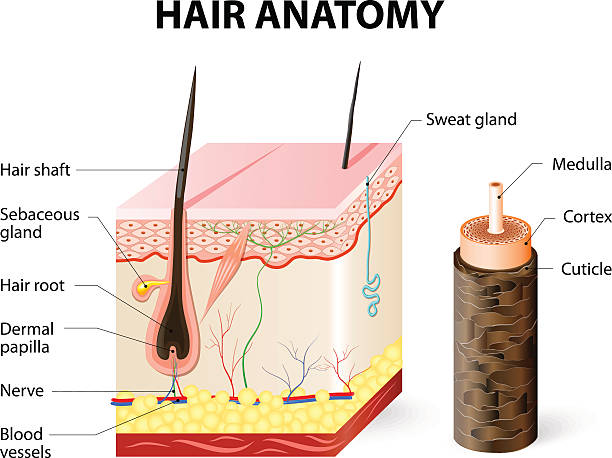
The Anatomy of Hair
The anatomy of hair includes three
main parts: the root, shaft, and tip. The hair root is found below the skin and
is the living part of the hair. The root is nourished by blood vessels and is
responsible for producing new hair growth. The hair shaft is the visible part
of the hair, which extends from the skin to the hair tip. The hair shaft is
composed of three layers: the medulla, cortex, and cuticle. The medulla is the
innermost layer and contains soft, spongy material. The cortex is the
middle layer and contains the pigment that gives the hair its color. The
cuticle is the outermost layer and is composed of hard, overlapping scales that
protect the hair shaft. The hair tip is the end of the hair shaft and is the
part that is most vulnerable to damage and breakage.
The hair follicle is the structure
in the skin that supports the growth of the hair. The hair follicle has several
important components, including the hair bulb, hair papilla, and sebaceous
glands. The hair bulb is the bottom of the hair follicle and contains the
matrix cells, which are responsible for producing new hair. The hair papilla is
a small, cone-shaped structure that provides the hair bulb with nutrients from
the blood vessels. The sebaceous glands secrete an oily substance called sebum,
which helps to keep the hair and skin moisturized.
The hair growth cycle is divided
into three phases: anagen, catagen, and telogen. The anagen phase is the growth
phase and lasts for 2-7 years. During this phase, the hair grows approximately
1 cm per month. The catagen phase is the transition phase and lasts for 2-3
weeks. During this phase, hair growth slows down and the hair follicle
begins to shrink. The telogen phase is the resting phase and lasts for 3-4
months. During this phase, the hair follicle is dormant and the old hair falls
out to make room for new hair growth.
Hair can be influenced by various
factors, including genetics, hormones, nutrition, and environmental factors.
Genetics plays a role in determining hair texture, color, and thickness.
Hormonal changes, such as those that occur during puberty, pregnancy, and
menopause, can affect hair growth and texture. A diet that is deficient in
certain nutrients, such as iron, can cause hair loss and slow down hair growth.
Environmental factors, such as exposure to heat and chemicals, can damage the
hair shaft and cause breakage.
In conclusion, hair is a complex structure that is composed of three main parts: the root, shaft, and tip. The hair follicle, hair bulb, hair papilla, and sebaceous glands play important roles in hair growth and maintenance. The hair growth cycle is divided into three phases and is influenced by various factors, including genetics, hormones, nutrition, and environmental factors. Understanding the anatomy of hair and how it grows can help people make informed decisions about how to care for their hair and maintain healthy hair growth.






Leave a Reply