
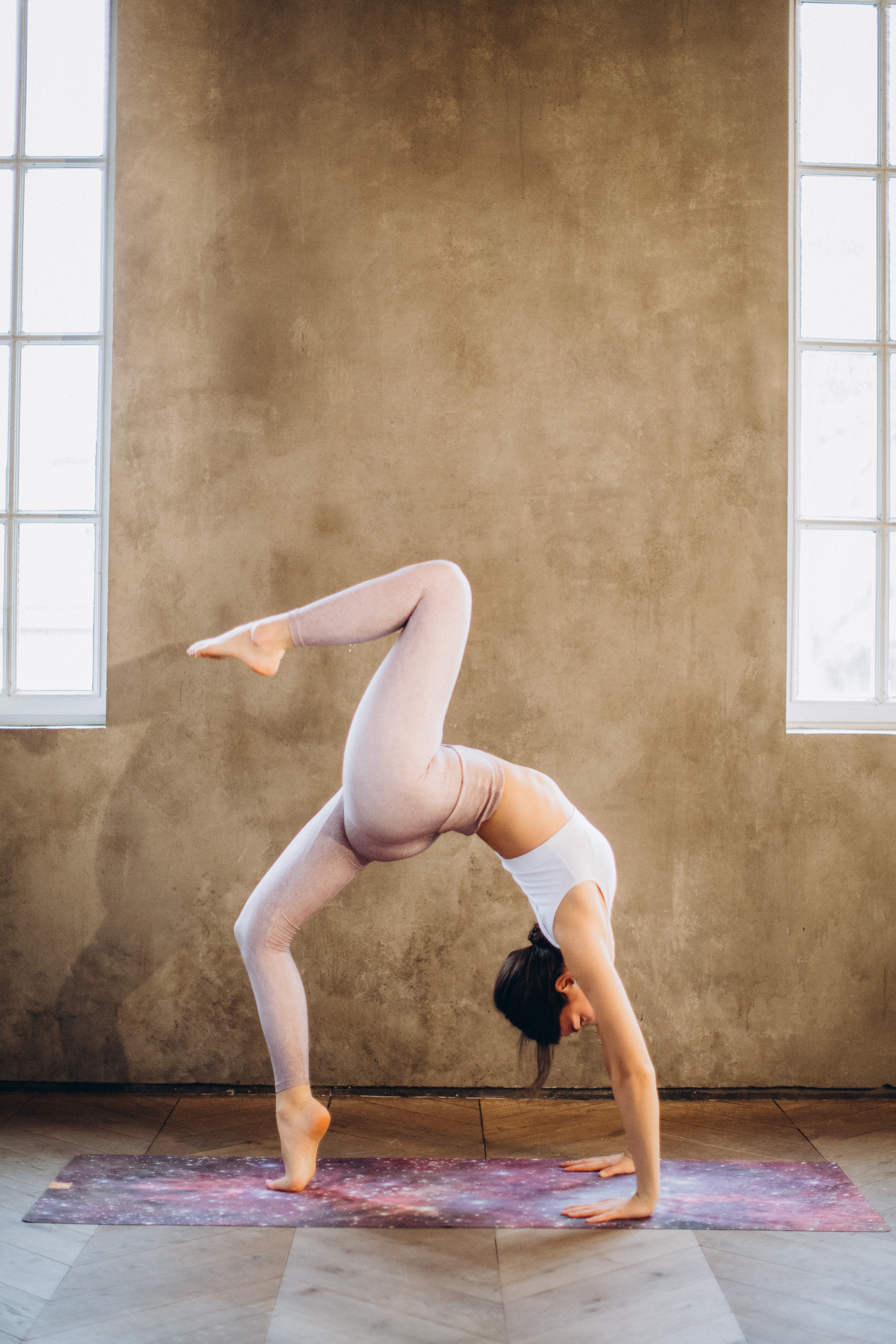
THE ADVANTAGES OF INCREASING FLEXIBILITY FOR HEALTH AND FITNESS (PLUS, THE BEST TOOLS FOR THE JOB)
You might image yoga practitioners and gymnasts doing the splits and bending and twisting their bodies into incredible contortions when you think about flexibility. Although achieving those degrees of flexibility is not required, increasing your flexibility can have a significant positive impact on your health and fitness.Advantages of Increasing Flexibility
How to Become More Flexible
1. Morning stretches that are dynamic
2. Retain hydration
3. Active stretching before working out
4. Work on Balance
5. Increase core power
6. Static stretching after exercise
7. Deep Inhalation
8. Show patience
wRemember to exercise patience. Flexibility needs time to develop, and pushing oneself too hard too soon can easily lead to damage. According to Savage, it typically takes four weeks to start noticing notable improvements in flexibility and stability. It is undoubtedly individual-specific and mainly depends on your dedication to including stretching in your daily practice.
Since flexibility
naturally declines with age, enhancing your muscles' and joints' suppleness and
increasing your body's agility will benefit you now and undoubtedly in the long
run, helping you to increase your strength output and lower your risk of
accidents. Flexibility is included as one of the essential elements of a
healthy body in the U.S. Department of Health and Human Services' Physical
Activity Guidelines for Americans, right up there with physical activity and a
balanced diet.
Although studies have
shown that men are often less naturally flexible than women, this does not
indicate that men cannot become more flexible. So why are you still waiting?
Flexibility might not be
as visually appealing as some other training components. It won't give you
bigger biceps or leaner abs, and you can't use it to post a screenshot about
breaking a record online. However, it is still significant and will aid in your
acquisition of those other, flashier goods.
"We all recognize
the value of concentrating on our overall strength and cardiovascular
endurance, but frequently we neglect one of the crucial elements to obtaining
both: flexibility," claims Savage. "Improving our flexibility has
numerous advantages, not just the ones listed here,"
•
Preventing
injuries
•
extending
joint range of motion
•
improving
balance and stability
•
enhancing
agility and mobility
•
A Greater
Muscle-Powered Strength Output
•
Improved Body
Mechanics and Posture
•
Improved
Blood Flow Throughout the Body
Although stretching
doesn't necessarily increase flexibility, it does play a significant part in
doing so. Savage advises incorporating the following routines into your daily
schedule and workouts in order to experience the advantages described above.
Every day should begin
with a dynamic stretching regimen that involves movement during the stretch as
you prepare for the day's activities. Here are some excellent examples of dynamic
stretches:
• Hip Openers, which
engage the hip flexors by performing lunges, pigeon stance, and butterfly sits.
• Toy Soldiers, which
involves standing and bringing your toe up toward your extended arm to work the
hamstrings.
It is best to perform
each stretch for 30 seconds throughout the full dynamic routine.
To keep your body
hydrated and your joints lubricated, drink plenty of water.
Active stretching should
be done before every activity to improve blood flow to the joints, muscles, and
ligaments. Several excellent instances of active stretching include:
•
Bend and
Reach: To stretch the hamstrings and lower back, bend forward, stretching your
arms behind your legs, and then raise your arms to the ceiling.
•
Jumping Jacks
to stretch and warm up the entire body. • Trunk Twists, where you lie down and
move your legs (in a 90-degree angle) over to one side and then the other,
maintaining your back flat on the ground and arms out wide.
By raising the heart rate
closer to the Target Heart Rate Zone, which is ideal for burning calories
during a workout regimen, all of these actions also boost blood flow. Once
more, it's optimal to carry out these repetitions for 30 seconds each during a
warm-up.
Exercises for stability
and balance that emphasize single-sided motions, such as the "Single Leg
Hinge," should be performed.
•
Standing on
one leg, extend your opposite hand toward your opposite foot to finish this
exercise. Your range of motion in this situation will depend on your
flexibility. So, your options are to grab your toe, mid-shin, or knee.
Your body's flexibility
will be enhanced by increasing your general core strength so that you can
maintain proper form and technique throughout your exercises or activities.
•
Plank
variants are excellent for building core strength because they work the entire
core.
•
Concentrated
Russian Twists or Weighted Trunk Twists, where you perform sitting oblique
twists with or without a weight in your hands, will also help you enhance
rotation core strength and stability.
•
Superman or
Bird Dog stretches are also excellent for strengthening the low back. The
Superman stretch involves lying on your stomach and stretching out as if you
were swimming, while the Bird Dog position involves getting on your hands and
knees and extending the opposite arm and opposite leg out simultaneously,
producing a straight line.
Every workout should be
finished with a static stretching program that involves stretching your muscles
while you are in a more sedentary position. The seated V-Stretch, which
involves sitting with your legs in a V shape and extending your arms out to
touch your toes or in the center in front of your torso to stretch the
hamstrings, is a great static stretching exercise.
•
The butterfly
stretch, which involves putting your knees out to the side while sitting with
the bottoms of your feet touching. This extends the adductor.
•
The Cobra
Stretch, which involves lying on your stomach and lifting your upper body off
the ground to stretch the low back and abdominal chain.
•
Kneeling hip
flexor stretch, which involves bending your front leg and getting into a lunge
stance with your back knee on the floor.
Each of these can be held
for 30 to 60 seconds while you slowly breathe through the stretch.
To assist prepare your
body for sound sleep, finish each day with a total-body static stretching
exercise that emphasizes deep breathing into your muscles.
Find out: Ways to build muscle in just 1 week






Leave a Reply