
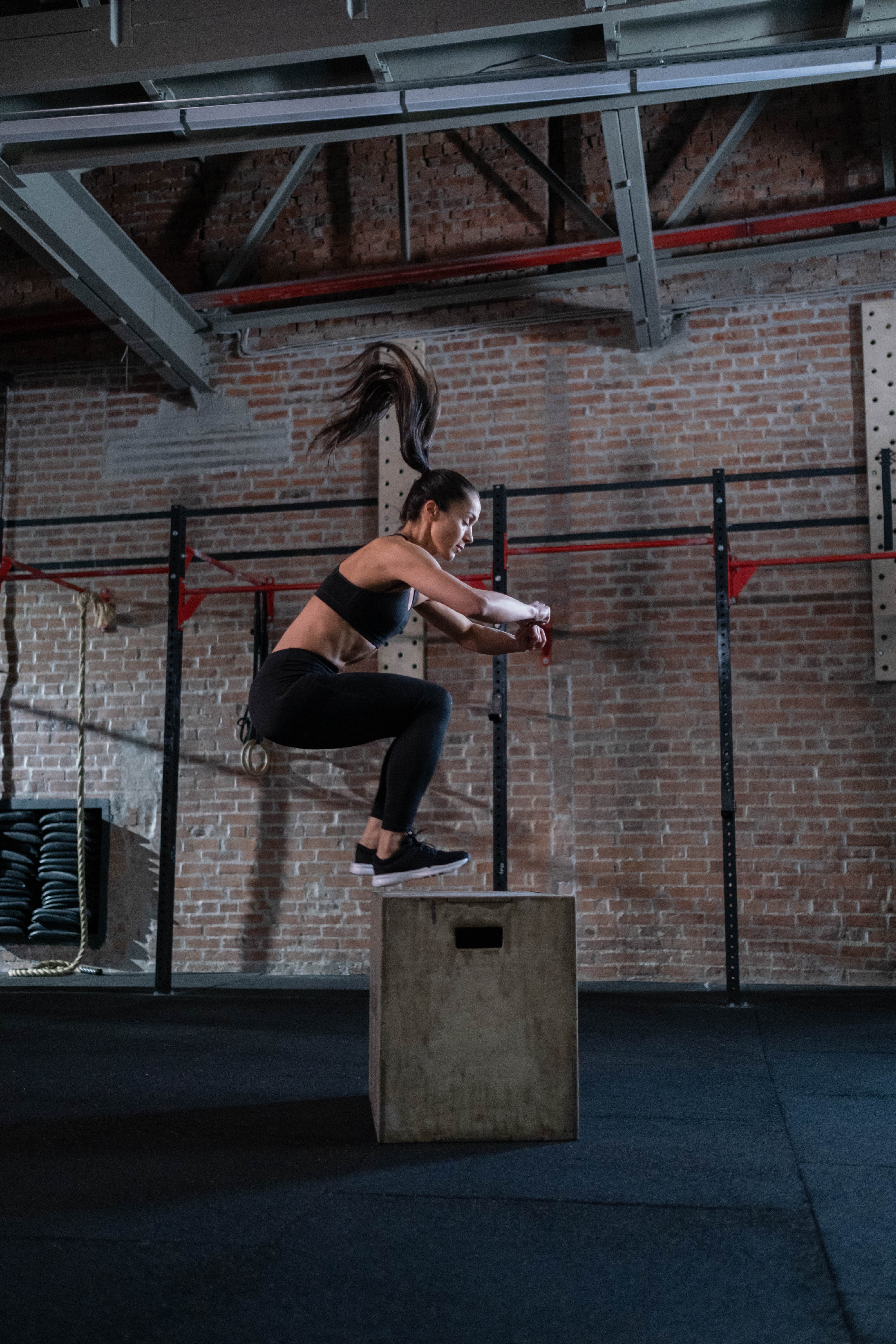
Jumping Squats
Squat leaps are a fantastic technique to increase the
difficulty of your exercises and significantly increase heart rate.
For an extra kick, add these to the conclusion of your
typical cardio routine. Alternatively, repeat them many times during your
workout anytime you want to enhance the intensity or change things up. Because
of the high impact nature of this advanced exercise, you should land with soft
knees to safeguard your joints. Do the maneuver without leaping if the impact
is too great. Take your time and begin with modest leaps if you have never
performed this technique before. Avoid this activity if you experience any
discomfort or pain. Basic exercises like squat leaps and plyometric jumps
increase an athlete's power, agility, and vertical jump. This exercise is often
used as the introductory exercise to improve one's ability to do the vertical
leap, high jump, long jump, and box jump. You may do it as a stand-alone
workout or as part of a combination with other exercises that come before or
after the leap.
This exercise is used by some coaches to aid their athletes
with their full-squat technique. The fact that squat jumps can be performed
without any equipment in a small area makes them a wonderful exercise to add in
at-home exercises. They may be used to supplement cardio exercises with
high-intensity intervals. The muscles in your lower body—abdominals, glutes,
hamstrings, and lower back—as well as your core, are worked during this
exercise. Near the top of the list for generating explosive power just with an
athlete's body weight is the squat jump exercise. Plyometric workouts should be
performed by anybody who takes part in sports like soccer, football, track,
baseball, or track that demand a lot of sprinting. Since both need that
explosive force from the muscles, several studies have demonstrated that
workouts like the squat jump enhance sprint performance. It is beneficial for
kids as early as age 5, and it will improve their balance, agility, and
sprinting and kicking skills. Only do this advanced dynamic power move workout
after a thorough warm-up.
1. Place your feet shoulder-width apart and bend your knees
slightly.
2. Squat down to a complete squat stance by bending your knees.
3. Extend through the legs to lift the body off the ground
by engaging the quadriceps, glutes, and hamstrings. The feet will be a couple
inches (or more) above the floor when the legs are completely stretched.
4. Descend into the squat once again for an explosive leap,
controlling your landing by traveling through your foot (toes, ball, arches,
heel).
5. Immediately after landing, do the next leap.
Your objectives will determine how many squat jumps to do in
each set. If you want to build strength and increase your vertical leap, you
should strive for higher, more powerful jumps. For three to four sets, you may
merely do five repetitions. You should leap higher and quicker if you want to
improve your overall fitness. This exercise should not be done with cold
muscles. Perform a cardiovascular warm-up, such as quick walking, running, or
light jump-roping, to ensure that blood has reached your muscles.
Think about the surroundings. Use a soft, flat landing
surface instead of concrete until you feel comfortable with the activity.
When you discover a workout that is both enjoyable and
beneficial, you tend to perform it more often. In this situation, resist the
desire. To prevent overusing them or putting too much stress on your joints,
just do these exercises once a week at most.
A review of the scientific literature was conducted and the
results were published in the Journal of Strength and Conditioning Research. It
is out that adding more weight to the workout had no further advantages.
If you have any knee, ankle, hip, back, or neck problems,
talk to your doctor or physical therapist about whether squat leaps should be
avoided. Squat leaps are probably something you should stay away from if you've
been advised to solely engage in low-impact exercises. This is true during
pregnancy because your joints are affected by hormones, and your balance will
be affected by a shift in your body's center of mass.
In order to give your body enough time to heal and for the exercise to be successful, only do squat jumps every 48 to 72 hours if you are free of these problems. Always make sure the space is clear of obstructions and has a non-skid surface before doing any leaps. To prevent them from landing on your feet while doing squat leaps, keep dogs and young children away from the area.
Also read: How to eat to gain muscle






Leave a Reply