
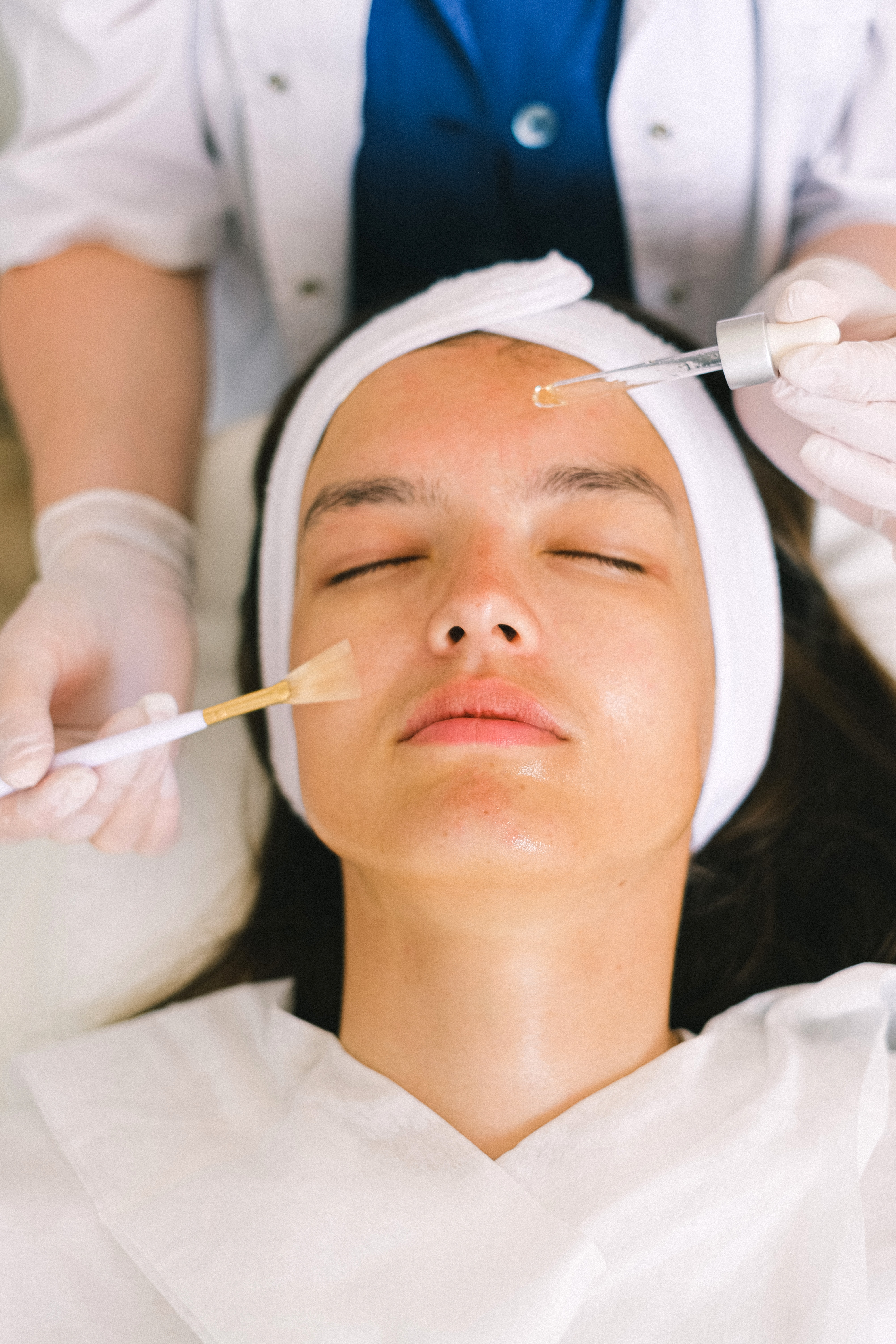
FACIAL TYPES & THEIR BENEFITS (PLUS HOW TO CHOOSE THE BEST TREATMENT)
Welcome to our comprehensive field guide to faces:
Allow us to help you navigate the waters if you've ever felt overwhelmed and/or
puzzled by the sheer variety of skin treatments (been there). You see, getting
a facial is a time and financial investment. Therefore, it's crucial to know
which choice is appropriate for your skin type and issue before scheduling just
any treatment. Although there are a lot of spa services available, using this
guide will make it easier for you to choose what you want.
There are six different facial types.
Every facial will have a similar structure (steam, exfoliate,
extract, massage, moisturize, etc.), with a few more treatments or instruments
added according on your skin's specific need. For instance, an esthetician
might spend more time on extractions when providing an acne facial than on
massage work when performing a lymphatic facial. For each of the highlights,
see below:
1. Traditional facial
This facial is a regular one. The general idea is as
follows: Every esthetician has their own particular order and products.
1. Skin analysis: According to famous esthetician Renée
Rouleau, "the esthetician will start by talking to you and asking you
questions so they can identify the best treatment plan for your skin."
2. Cleanse: To prepare a blank slate for all subsequent
treatments.
3. Exfoliation: Although this can take many different
forms, ultrasonic exfoliation, microdermabrasion, or bio-brasion are the most
popular, according to Rouleau.
4. Steam: To promote blood flow and make extractions by
the esthetician easier.
5. Massage: Possibly the nicest component of the
procedure (IMO). Most estheticians will massage your face in some way to
improve product absorption, enhance blood flow, and tone your facial muscles.
Techniques and timing may vary.
6. Manual extractions: An esthetician may use manual
extractions to unclog clogged pores if you have congested skin. Here, the
particular order varies: Rouleau says, "Unlike other estheticians, I
always conduct extractions after the massage," although usually after the
exfoliation and steaming procedures.
Options for masks differ based on your skin's need
(hydrating, pore refining, etc.).
2.Hydrafacial
Using a technique akin to microdermabrasion, a
hydrafacial combines exfoliation and hydration while also sucking all the
debris out of pores and filling them with nutrient-rich serum
"boosters" to revitalize the skin.
The majority of sensitive and acne-prone skin types can
tolerate hydrafacials because they are noninvasive and gentle enough for them.
However, according to board-certified dermatologist Ava Shamban, M.D., creator
of SKINFIVE, "it's better not to use on any active, open acne." She
continues, "This is frequently excellent for a patient with extremely
dehydrated, dull, flaky, or other weary, sallow skin that needs a deeper clean
and general renewing refresh.
3. LED facial
Low-level light treatment has received accolades for
boosting collagen formation, treating bacteria, and repairing wounds, however
its specific mechanism of action is still unclear. Furthermore, according to
Shamban, different hues may offer various advantages because they stand for
various wavelengths that penetrate the skin at various depths, which means they
can be used to cure various skin issues.
For instance, according to celebrity esthetician Shani
Darden, "Red light maintains healthy elasticity in the skin, which plumps
and firms, helping to decrease the appearance of fine lines and wrinkles."
"Blue light aids in reducing blemish-causing bacteria, which aids in the
healing of existing breakouts and hinders the emergence of new ones."
Typically, LED technology is added to traditional
alternatives or used in conjunction with other therapies. According to Darden,
"all of my facials end with 20 minutes under a professional LightStim LED
face panel."
4. Facial firming or contouring
This procedure, which is also known as a "exercise
facial," aims to tone and tighten the skin. To lift and tone the muscles,
many specialists will also include a few minutes of face massage, but a firming
facial will often take longer and entail more time with equipment and possibly
devices. Consider going to the gym for your face as an added advantage, advises
Nina Carla, a medical esthetician at Motykie Med Spa. (Therefore, facial
exercise.) It "lifts, sculpts, and firms the skin to help prevent sagging,
utilizing both manual and electrically powered tools and machines."
For instance, this kind of facial might use a vibration
therapy instrument or a microcurrent device (like Darden's renowned sculpting
wand). Darden continues, "I'm infatuated with microcurrent gloves and use
them in all of my facials. "They enable a more thorough, evenly
distributed therapy. For more lifted and sculpted cheekbones, you can literally
scoop up the cheek muscles!"
5. facial lymphatic
Lymphatic massages are described in detail here, along
with instructions on how to give one yourself at home, but in general, this
age-old practice helps support the body's natural detoxification process.
According to Ivonne Boujaoude, DNM, a health consultant at Modern Holistic
Health, "This special massage method improves lymph movement and enhances
the clearing of stored waste in the body."
A certified acupuncturist or esthetician may use their
hands, a gua sha stone, or facial cupping instruments to stimulate flow because
your face and neck have a high concentration of lymph nodes (although,
professional facial cupping treatments will likely follow an acupuncture
session).
"The lymphatic system in your body does not have a
separate pump like the circulatory system does. Lymphatic massage can help with
that "Rouleau says. Simple lymphatic stimulation can help skin issues like
puffiness, acne, dryness, dullness, and even skin sensitivity get better or
even go away since it encourages the body to do what it was designed to do:
heal.
6. Facial acne
This procedure, which is also known as a
"decongesting facial" or "deep cleansing facial,"
frequently entails extractions and the use of a high-frequency device to
eliminate acne-causing germs immediately upon contact. According to Rouleau,
the former clears clogged pores while the latter concentrates on active
blemishes.
You must strike a balance when treating acne; you don't
want to overwork the skin with peels and extractions. According to Shamban, the
objective is to get rid of germs without triggering a sebum reaction while also
getting rid of excess surface sebum, dead skin cells, and pore buildup.
Therefore, the esthetician may add some hydration, such as a cold mask to
reduce irritation.
advantages of facials.
Consider how you might care for your general well-being:
You'll have yearly exams with a doctor to address any issues, but to achieve
particular dietary and fitness objectives, you might work with a dietician
and/or personal trainer. You can visit a dermatologist for routine
examinations, but you might also see an esthetician to assist with maintenance.
And estheticians handle that maintenance in a very
significant way: Appointments are typically an hour or longer, allowing the
specialist to devote enough time to your skin and address any issues or objectives
you may have. In addition to clearing the pores and balancing the skin, a
facial will also teach you how to take care of your skin at home and what foods
to avoid if you have acne, according to Rouleau. Additionally, because they
deal with such a wide range of skin types on a daily basis, estheticians have a
wealth of expertise that can aid you in your quest for better skin. Rouleau
continues, "Getting expert skin care advice early will give you healthy
habits for a lifetime.
Of course, you have to put in the effort, just like
with nutrition and exercise. After all, you can't expect any miraculous changes
from your dietician or trainer while entirely disregarding your food and
exercise routine at home. similar to skin care The effects of a facial won't stay
as long if you don't routinely use the correct products for your skin,
according to Darden.
2. How Often Should You Get a Facial from a Professional?
Prior to scheduling a facial, it's critical to know
what results you hope to achieve (do you want a lift? Hydration? Deep cleaning?
Again, your esthetician can adjust the best facial for your skin's
requirements, but in general, they'll advise the following for each issue:
1. Skin aging
If aging skin is your primary concern, look for
rejuvenating facials that encourage the synthesis of collagen and boost cell
turnover. Consider microcurrent or firming facials for lifting and toning, LED
therapies (particularly red LED light) for supporting elasticity, and lymphatic
facials for enhancing circulation.
2.Dry skin.
For people with drier skin types, Carla advises using
procedures like hydrafacials that simultaneously thoroughly clean and hydrate
the skin. Many relaxing elements, including aloe and hyaluronic acid, are
infused into this treatment to help calm, soothe, hydrate, and plump the skin.
Typically, massage therapy is excellent for dull skin
because it increases blood flow, which feeds the skin's cells with nutrients
and oxygen (resulting in a brighter glow). According to Rouleau, aestheticians
are trained in facial massage, which promotes healthier, more radiant skin by
boosting circulation. If you struggle with a dull complexion, this is helpful.
3. Outbreaks.
Decongesting acne facials that target congested pores
and LED treatments that reduce acne-causing germs are recommended for people
who have breakouts. For the best results, blue LED is frequently utilized in
conjunction, according to Shamban.
Your esthetician may also reduce the amount of massage
work they do on you or forego it altogether if you are experiencing active
breakouts. According to Rouleau, "This step might be skipped for those who
are dealing with severe breakouts, since it may be too much stimulation
(skipping this would also allow the esthetician to spend more time on
extractions)."
Having said that, lymphatic facials (which promote
flow) and firming facials, which use sculpting tools to activate the muscles,
are particularly beneficial. According to Darden, "the vibrations also
improve circulation, which increases the skin's oxygen intake and results in
more luminous, young skin." Additionally, hydrafacials can be effective in
this situation since antioxidant-rich serums are infused into the pores;
additionally, skin that is well-hydrated looks much brighter.
3. Skin Benefits of Olive Oil
It turns out that olive oil, a common pantry item that
is known for its nutritional advantages in our diets, may also be good for our
skin. Olive oil is high in vitamins and antioxidants, and studies have shown
that it improves skin hydration, has anti-aging properties, and protects
against sun damage. Olive oil can be applied on the skin on its own or in
combination with other skincare products, such as lotions or facial cleansers.
How Does Olive Oil Work?
Olive oil is produced by crushing olives and then
extracting their oil, making it nutrient-rich. When applied topically, its
beneficial monounsaturated fats and antioxidant content may benefit the skin.
Similar to peaches and plums, olives are regarded as a
soft fruit. They can therefore bruise readily, which lowers the oil's quality.
To get high-quality olive oils, look for ones that say "hand-picked
olives" on the label. The olives are picked, and after that they are put
in a stainless steel roller where they are ground into a paste. Malaxation is
the process of gradually combining that paste with water. This aids in
extracting the molecules of oil. The solid components of the olive paste are
then separated from the water and oil by centrifuging the mixture.
Olive oil can be used to the skin for additional
moisturization and the treatment of dry skin since it helps to keep moisture
in. Olive oil has been used into the formulations of many cosmetic items, including
lotions and soaps, for the benefits it offers the skin.
Advantages for Skin
Olive oil contains a wealth of beneficial vitamins,
lipids, and antioxidants that can help skin look younger. It hydrates skin by
retaining moisture, and its antioxidants may lessen the appearance of age
signs.
Currently, we are aware of the following olive oil skin
benefits:
• Hydrates skin
• Decreases aging symptoms
• Prevents oxidative stress
• Boosts collagen1
• Scrubs the skin
• Reduces the chance of acne3
• Aids in wound healing
• Possesses anti-inflammatory qualities
• Helps to avoid pressure sores5
Methods of Use
You can start using olive oil in your skincare routine
in two different ways. You might start by making purchases of goods with olive
oil on the ingredient list. Olive oil is currently a common ingredient in
moisturizers, soaps, and facial cleansers.
Use the olive oil that is currently in your pantry as
an alternative. Select extra virgin olive oil of high quality without any
chemical additives. Your skin will benefit from a modest application of
moisturizer. A little goes a long way, and any extra oil may be removed with a
fresh towel. It's crucial to get rid of extra oil because doing so keeps your
pores from becoming clogged. Breakouts are caused by blocked pores.
When your skin feels dry or as part of your regular
skincare routine, you can use olive oil. After cleansing, apply a thin layer of
moisturizer on your face. Use olive oil after applying lotion and before
applying makeup since it helps to lock in moisture. If you use a daily
sunscreen every morning, blot away any extra by applying a tiny coating of
olive oil right before the sunscreen.
At the end of the day, olive oil can also be used to assist remove clingy makeup. You are aware of how damaging makeup removers can be to your skin if you have ever had to chisel off waterproof mascara. Olive oil naturally removes makeup from the skin, greatly enhancing the efficacy of your daily cleanser.
Also
read: Best foods for beautiful skin






Leave a Reply